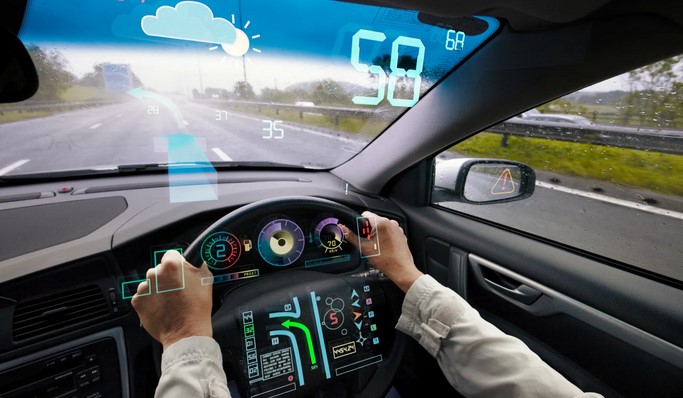
The automotive industry is undergoing a rapid technological transformation, and one of the most promising innovations reshaping the driving experience is Augmented reality windshields. These advanced displays are designed to project digital information directly onto the windshield, seamlessly blending real-world visuals with contextual data. Rather than forcing drivers to glance away at dashboards or infotainment screens, this technology brings critical information into the driver’s natural line of sight. As vehicles become smarter and more connected, augmented reality windshields are emerging as a key interface that enhances safety, awareness, and overall driving efficiency.
Understanding Augmented Reality Windshield Technology
Augmented reality windshields rely on a combination of hardware and software systems that work together to overlay digital elements onto the driver’s view of the road. At the core of this technology are advanced head-up displays (HUDs), cameras, sensors, and real-time data processing units. These components analyze driving conditions, vehicle speed, navigation routes, and surrounding objects to generate relevant visual cues.
Unlike traditional HUDs that display basic information such as speed or warning icons, augmented reality windshields project graphics that appear anchored to real-world objects. For example, navigation arrows can seem to rest directly on the road, lane boundaries may be highlighted during poor visibility, and potential hazards can be outlined before they become immediate threats. This spatial alignment reduces cognitive load, allowing drivers to interpret information more quickly and intuitively.
The software behind these systems uses artificial intelligence and machine learning to adapt displays based on driving context. Urban traffic, highways, and adverse weather conditions all influence how and what information is shown. As connectivity improves through vehicle-to-everything (V2X) communication, augmented reality windshields can also receive data from traffic infrastructure and other vehicles, further enhancing situational awareness.
Safety, Convenience, and Driver Experience Benefits
One of the strongest arguments for augmented reality windshields is their potential to significantly improve road safety. By presenting information directly within the driver’s field of view, these systems reduce the need for head or eye movement away from the road. This can lower reaction times and help prevent accidents caused by distraction.
In addition to safety, convenience plays a major role in adoption. Navigation becomes more intuitive when turn-by-turn directions are visually integrated with the road itself. Speed limits, traffic signs, and hazard warnings can be displayed exactly where they are relevant, minimizing confusion and decision fatigue. Drivers no longer need to interpret abstract symbols on a screen; instead, they receive clear, context-aware guidance.
Human-Machine Interaction and Personalization
A key subheading highlights how personalization enhances usability. Augmented reality windshields can be tailored to individual driver preferences. Some drivers may prefer minimal displays with only essential data, while others may opt for enhanced visuals that include navigation, safety alerts, and vehicle diagnostics. Voice control and gesture recognition further reduce the need for manual input, supporting safer interaction.
From a user experience perspective, this technology also supports accessibility. Visual cues can assist older drivers or those with slower reaction times by providing earlier warnings and clearer guidance. As the systems evolve, adaptive displays may even adjust brightness, color contrast, or information density based on driver behavior and environmental conditions.
Challenges, Adoption, and the Road Ahead
Despite their promise, augmented reality windshields face several challenges before widespread adoption becomes a reality. One major concern is cost. Integrating high-resolution projection systems, sensors, and advanced software increases manufacturing expenses, which can limit availability to premium vehicles in the early stages.
Technical limitations also exist. Ensuring accurate alignment between digital overlays and real-world objects requires precise calibration. Even minor inaccuracies could cause confusion or distraction. Additionally, displays must function reliably under varying lighting conditions, including bright sunlight, nighttime driving, and adverse weather.
Regulatory and safety standards present another hurdle. Automotive authorities must establish guidelines to ensure that augmented displays do not overwhelm or distract drivers. Balancing information richness with simplicity is critical, as excessive visual data could undermine the safety benefits the technology aims to provide.
Looking ahead, continuous advancements in processing power, sensor accuracy, and artificial intelligence are expected to address many of these challenges. As production costs decrease and standards mature, augmented reality windshields are likely to move from luxury vehicles into mainstream models. Their integration with autonomous and semi-autonomous driving systems will further solidify their role as a central interface in future mobility.
Augmented reality windshields represent a transformative step in how drivers interact with their vehicles and the road environment. By merging digital intelligence with real-world visuals, they offer a safer, more intuitive, and more personalized driving experience. While challenges related to cost, regulation, and technical precision remain, ongoing innovation continues to push this technology closer to everyday use. As the automotive industry evolves toward smarter and more connected vehicles, Augmented reality windshields stand at the forefront of driving displays, shaping the future of transportation with clarity, confidence, and enhanced situational awareness.