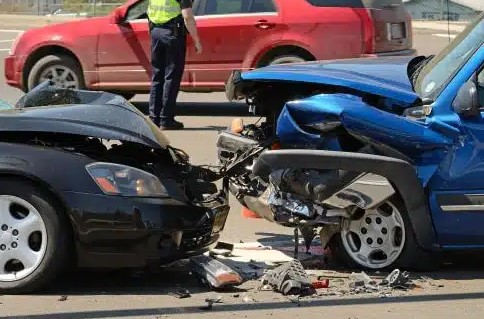
You’re cruising at 60 mph, the radio is playing your favorite track, and for a split second, you glance down to check a notification on your phone. In that heartbeat—roughly 4.6 seconds—you’ve just traveled the length of a football field blindfolded. Statistically, over 90% of road collisions are caused by human error, and most of them happen within 25 miles of home. The road isn’t just a stretch of asphalt; it’s a high-stakes environment where the laws of physics are always enforced, and there are no “undo” buttons.
In my decade of testing performance vehicles and analyzing telematics data, I’ve realized that the most important safety feature isn’t the 12 airbags or the Automatic Emergency Braking (AEB) in your car—it’s the six inches of space between your ears. I’ve sat in the passenger seat with professional racing drivers and terrified teenagers, and the difference between a survivor and a statistic often comes down to defensive driving.
If you want to master the best ways to avoid car accidents, you need to stop driving “reactively” and start driving “proactively.” This guide is your technical and psychological roadmap to staying safe on the grid.
The Philosophy of the “Bubble”: Defensive Driving 101
Think of your car as a moving magnet. Every other object on the road—the erratic delivery van, the speeding motorcycle, the distracted pedestrian—is a North Pole trying to push against your North Pole. Your goal is to maintain a “Safety Bubble” that prevents these magnets from ever touching.
When we talk about defensive driving, we are talking about Spatial Awareness and Kinetic Energy Management. If you can control the space around your vehicle, you control the outcome of almost any situation.
The 3-Second Rule and Perception-Reaction Time
Technically, the “3-Second Rule” is based on Perception-Reaction Time (PRT). It takes the average human about 1.5 seconds to realize there’s a hazard and another 1.5 seconds to physically apply the brakes. At highway speeds, that 3-second gap is the bare minimum required to dissipate the kinetic energy of a 4,000-lb metal box.
Scanning the Horizon: Beyond the Hood Ornament
One of the biggest mistakes beginners make is “tunnel vision”—staring at the bumper of the car directly in front of them. To truly find the best ways to avoid car accidents, you need to scan at least 12 to 15 seconds ahead.
-
The 15-Second Lead: This allows you to see traffic lights changing three blocks away or brake lights flickering five cars ahead.
-
The “Look Through” Technique: I always teach my students to look through the windows of the car in front of them. If you see the brake lights of the third car ahead, you can start slowing down before the guy directly in front of you even realizes there’s a problem.
-
LSI Keywords: Predictive driving, traffic flow analysis, collision avoidance systems.
Managing Intersections: The Danger Zone
Intersections are the most complex “puzzle pieces” on the road. Roughly 40% of all accidents occur at intersections. Even if you have a green light, you are not “safe.”
The “Clearing the Intersection” Ritual
I never enter an intersection the moment the light turns green. I wait two seconds and look Left, Right, and Left again. * Why? “Red-light runners” are most likely to hit you in those first three seconds of a light change.
-
The Technical Edge: By looking left first, you are checking the lane closest to you—the one where a collision would be most immediate and severe.
Vehicle Dynamics: Understanding Your Machine
You can be the best driver in the world, but if your hardware fails, the software (you) won’t matter. Defensive driving includes Pre-Trip Technical Audits.
-
Tire Contact Patches: Your car stays on the road via four patches of rubber, each about the size of a smartphone. If your tread depth is below 2/32 of an inch, or if your tire pressure is incorrect, your braking distance increases exponentially, especially in wet conditions.
-
Weight Transfer: When you slam on the brakes, the weight of the car shifts to the front tires (Nose-dive). If you are mid-turn when this happens, you risk Oversteer (the rear sliding out). Smooth inputs are the key to maintaining traction.
Expert Advice: Tips and Hidden Warnings
As an automotive writer who has spent thousands of hours analyzing crash data, here is the “real talk” you won’t find in a standard driver’s ed manual.
Tips Pro: The “Exit Strategy”
Always leave yourself an “out.” When you stop behind another car at a light, you should be able to see their rear tires touching the pavement. * The Reason: If a car behind you looks like it won’t stop in time, or if the car in front stalls, you have enough steering angle to pull out and escape without having to reverse.
Hidden Warning: The “Blind Spot” Mirage
Modern cars have Blind Spot Monitoring (BSM), but they aren’t foolproof. Sensors can fail, and fast-moving motorcycles can enter your blind spot between the sensor’s “sweeps.”
-
The Expert Fix: Adjust your side mirrors outward until you can no longer see the side of your own car. This overlaps the view between your rearview and side mirrors, virtually eliminating the blind spot. If you can see your own car in the side mirrors, they are pointed too far inward.
“Velocitation”
After a long stint on the highway, your brain gets used to high speeds—a phenomenon called Velocitation. When you exit into a 30-mph zone, it feels like you’re crawling, causing you to inadvertently speed. Always check your speedometer when exiting a highway; don’t trust your “feel.”
Defensive Driving in Adverse Conditions
The best ways to avoid car accidents change when the environment turns hostile. Whether it’s heavy rain in Central Java or black ice in the mountains, the physics remain the same: Lower Friction = Lower Control.
-
Hydroplaning: This happens when a layer of water builds up between your tires and the road. If you feel the steering go “light,” do not slam the brakes. Ease off the accelerator and keep the wheel straight until you feel the tires “bite” the asphalt again.
-
Night Driving: Your high beams only reach about 350-500 feet. At 60 mph, you are “overdriving your headlights,” meaning you can’t stop within the distance you can see. Slow down by at least 5-10 mph at night to compensate for reduced depth perception.
Scannable Checklist for Every Drive
Before you put the car in gear, run through this quick mental check to ensure you’re practicing the best ways to avoid car accidents:
-
[ ] Phone on “Do Not Disturb”: Eliminating the #1 source of distraction.
-
[ ] Mirror Check: Can I see my own car? (If yes, move them out!).
-
[ ] The 4-Second Gap: Is it raining? Increase your following distance to 4 or 5 seconds.
-
[ ] Lights On: Even in daylight, keeping your headlights on increases your visibility to others by up to 25%.
-
[ ] Tire Health: Do I have enough tread for the weather?
Summary: Control the Controllables
Driving is the most dangerous thing most of us do every single day. But by adopting a defensive mindset, you move from being a “target” to being a “pilot.” You cannot control the person texting in the next lane, but you can control your distance from them, your speed, and your readiness to react.
The best ways to avoid car accidents aren’t found in a fancy gadget; they are found in your commitment to being present every time you get behind the wheel. Drive like everyone else on the road is trying to hit you, and you’ll likely never give them the chance.
What was the closest call you’ve ever had on the road, and what did it teach you about your driving habits? Or maybe you have a “secret” safety tip that saved you once? Let’s talk safety in the comments below!