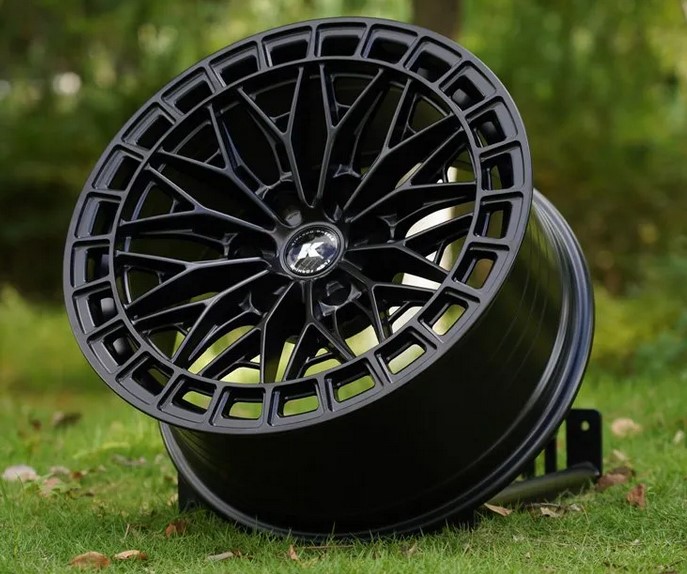
Source:https://www.kipardoracing.com

You are standing in the paddock of a local track day, watching two identical sports cars pull out onto the grid. They have the exact same engine tuning, the same exhaust, and the same sticky performance tires. Yet, as they exit the final apex onto the straightaway, one car effortlessly pulls away, looking noticeably crisper through the corners. You peek into the wheel wells later and spot the difference: the slower car is running heavy, stylish factory cast alloys, while the faster one is riding on ultra-lightweight, motorsport-derived rims.

Many drivers will happily spend thousands of dollars on cold-air intakes, ECU remapping, and exhaust systems to gain a modest 15 horsepower. However, they completely ignore the heavy metal rotating at all four corners of their vehicle.

Over my ten-plus years of swapping setups in the workshop and pushing project cars to their limits, I have realized that upgrading to lightweight car wheels is the single most effective modification you can make. It simultaneously improves acceleration, sharpens steering response, and increases fuel efficiency. Let’s look at the engineering physics and the best aftermarket wheel options available to optimize your car’s speed and efficiency.

The Concept of Unsprung Mass: A Simple Analogy

To understand why saving weight on your rims matters so much, you need to understand the difference between sprung mass and unsprung mass.

Think of your car like a hiker carrying a heavy backpack. If you put a 10-pound weight inside the backpack (sprung mass, supported by the car’s suspension), the hiker can carry it with a bit of extra effort. But if you tie those same 10 pounds directly to the hiker’s boots (unsprung mass, completely unsupported by the suspension), every single step becomes an exhausting chore.

[Sprung Mass]   ──► Body, Engine, Passengers ──► Supported by Springs
[Unsprung Mass] ──► Wheels, Tires, Brakes     ──► Sits Directly on the Road

Because wheels are rotational unsprung mass, saving just 1 pound of wheel weight can feel like removing 4 pounds of dead weight from the cabin when the car is accelerating or braking.

1. Traditional Cast vs. Flow-Formed vs. Forged Construction

Not all aluminum wheels are created equal. The manufacturing method dictates exactly how light, strong, and expensive a wheel will be.

[Gravity Cast] ──► Heaviest, Brittle ──► Budget-friendly
[Flow-Formed]  ──► Lighter, Stronger ──► Best value for enthusiasts
[Fully Forged] ──► Lightest, Toughest ──► Premium motorsport grade

Gravity and Low-Pressure Casting

This is how 90% of factory OEM wheels are made. Molten aluminum is poured into a mold. Because the metal settles naturally, manufacturers have to make the spokes thick and heavy to ensure structural safety. They are highly susceptible to cracking under heavy track impacts.

Flow-Formed (Rotary Forged) Technology

A brilliant middle ground. The wheel begins as a cast piece, but the outer barrel is heated and spun under high-pressure hydraulic rollers. This process stretches and compresses the aluminum, altering its molecular structure to mimic the grain alignment of a forged wheel. It results in a much thinner, lighter, and stronger barrel.

Fully Forged Monoblock

The gold standard. A solid block of aerospace-grade aluminum is subjected to immense mechanical pressure (often 10,000 tons) and carved into shape using precise CNC machines. Forged wheels are incredibly dense, allowing for impossibly thin spoke profiles while maintaining maximum structural integrity.

2. Top Lightweight Wheel Options on the Market

The aftermarket landscape features iconic wheel designs engineered specifically to drop lap times and maximize efficiency.

Enkei RPF1: The Undisputed Lightweight King

First introduced decades ago, the Enkei RPF1 remains a staple in the global track community. Enkei uses their proprietary MAT (Most Advanced Technology) flow-forming process to create a rim that rivals forged wheels at a fraction of the price.

  • The Weight: A standard 17×8-inch RPF1 weighs an astonishing 15.6 pounds (around 7 kg).

  • The Highlight: It features a unique pocket design around the bolt circles that shaves off extra ounces of dead weight right at the hub. It is highly versatile, clearing large brake calipers with ease.

Konig Hypergram: The Flow-Formed Value Champion

For budget-conscious enthusiasts wanting to maximize street performance and hybrid efficiency, Konig is hard to beat. The Konig Hypergram is a motorsport-inspired, 12-spoke wheel built using high-tech flow-forming technology.

  • The Weight: An 18×8.5-inch fitment tips the scales at a mere 17.8 pounds.

  • The Highlight: The multi-spoke pattern distributes structural load evenly across the rim profile, providing excellent rigidity when diving hard into tight autocross corners.

Volk Racing TE37: The Forged JDM Icon

If budget is no obstacle, Ray’s Engineering Volk Racing TE37 is the holy grail. This is a fully forged, one-piece monoblock wheel that has dominated both street culture and professional GT racing series for a generation.

Solid Aluminum Billet ──► 10,000 Tons of Forging Pressure ──► Ultimate Lightweight Rigidity
  • The Weight: Even in large 18×9.5-inch sizes, certain TE37 variants weigh just under 18 pounds.

  • The Highlight: Its classic six-spoke design isn’t just for looks; it offers an unmatched strength-to-weight ratio, resisting bends even when slamming over harsh track curbing.

Head-to-Head Comparison: Performance Wheel Matrix

Wheel Model Construction Method Average Weight (lbs) Relative Strength Best For
Enkei RPF1 MAT Flow-Formed 15.0 – 17.5 High Track days, daily tuners, budget speed
Konig Hypergram Flow-Formed 16.3 – 19.0 High Entry-level autocross, maximum EV/hybrid efficiency
Volk Racing TE37 Fully Forged 15.5 – 18.5 Extreme High-horsepower builds, elite track setups
Aodhan AFF7 Flow-Formed 19.0 – 22.0 Medium-High Street stance, intermediate styling builds

Pro Tips & Hidden Warnings

Upgrading your rollers isn’t as simple as checking the diameter. You need to watch out for the hidden parameters that can ruin your car’s ride quality.

⚠️ The Hidden Warning (The Upsizing Trap): Beginners often buy lightweight wheels but simultaneously upsize from a 17-inch wheel to a 19-inch wheel to look cool. Even if the 19-inch wheel is advertised as “lightweight,” a larger wheel pushes the heavy aluminum barrel further away from the center hub, which actually increases the rotational inertia. Stick to your factory diameter (or go one inch smaller) to get the true speed and fuel economy benefits.

💡 Pro Tip (The Tire Weight Factor): A wheel is only half of the equation. When shopping for a wheel and tire package, always check the weight specification of the performance tires you choose. A heavy tire can completely cancel out the unsprung weight savings of an ultra-light forged rim. Keep the entire package light!

The Verdict: Upgrading for Speed and Fuel Economy

Upgrading to lightweight car wheels delivers immediate, tangible dividends across every driving metric:

  • Choose Enkei or Konig flow-formed wheels if you want the absolute best performance-per-dollar ratio. Your car will accelerate quicker, and your hybrid or daily commuter will see a noticeable bump in miles per gallon due to decreased rolling resistance.

  • Choose a fully forged setup like Volk Racing if you run a high-horsepower street monster or time-attack car that demands maximum stiffness to handle extreme cornering G-forces.

What’s Your Setup Strategy?

Uncorking your car’s hidden potential starts where the rubber meets the road. Dropping rotating mass transforms how a vehicle communicates with you through the steering wheel.

Are you looking to shed weight for quicker lap times, or are you trying to squeeze extra driving range out of your hybrid or EV? Drop your current car model and tire sizes in the comments below, and let’s configure the perfect lightweight fitment for your ride!

Source:https://media.licdn.com

The honeymoon phase with a luxury car usually ends not with a bang, but with a beep. It is that sudden dashboard alert from an active air suspension system or a complex dual-clutch transmission that causes a pit in your stomach. I will never forget a client who brought a stunning, twin-turbocharged European sedan into my shop after buying it used for a bargain price. He thought he had scored the deal of a lifetime until I had to explain that fixing his neglected variable valve timing and replacing a leaking steering rack would cost more than the vehicle’s entire market value.

During my ten years diagnosing, repairing, and driving premium European and domestic machinery, I have noticed a massive disconnect. Buyers stretching their budgets to enter the high-end automotive world often forget that while a luxury car depreciates, its parts and labor costs never do. Proper luxury car maintenance is not about waiting for something to break and throwing money at a dealership; it is a proactive, disciplined strategy to preserve engineering excellence.

Owning a high-performance, premium vehicle should be an exhilarating experience, not a financial nightmare. Let us lift the hood and explore the exact blueprint required to keep your high-end machine performing like a masterpiece.

The Luxury Lifecycle: Why High-End Engineering Demands a Different Strategy

To understand premium vehicle care, think of your luxury car like a fine Swiss mechanical watch. A standard economy car is like a reliable digital watch—it is basic, robust, and can take a beating with minimal adjustment. A luxury vehicle, however, is packed with intricate gears, high-precision sensors, and advanced materials designed to deliver unmatched performance, comfort, and speed. If one tiny gear loses its lubrication, the entire system suffers.

High-end cars push mechanical boundaries. They use tight tolerances, complex electrical architectures, and specialized lightweight alloys. Because of this, standard maintenance intervals and generic fluids are out of the question.

From a technical perspective, keeping these machines in top shape boils down to three primary pillars: fluid purity, thermal management, and electrical system health.

Proactive Pillars of Premium Vehicle Care

If you want to avoid catastrophic component failures and keep your high-end vehicle driving like it just rolled off the showroom floor, you must focus on these critical areas.

Fluid Purity and Strict OEM Specifications

In a luxury vehicle, fluid is a high-tech component. You cannot simply walk into a big-box store and grab any generic fluid that happens to be on sale.

Modern high-performance engines utilize advanced variable valve lift systems and complex turbocharger journals that require specific chemical compositions to prevent oil starvation. European marques like BMW, Mercedes-Benz, and Audi enforce strict OEM (Original Equipment Manufacturer) approvals (such as BMW Longlife-01 or MB 229.5). These oils are engineered to resist shearing under immense thermal stress and keep internal components free of carbon buildup.

  • Transmission and Differential Services: Many luxury brands claim their automatic gearboxes feature “lifetime” transmission fluid. In my professional experience, “lifetime” simply means until the warranty expires. To protect complex multi-clutch or torque-converter systems, refresh these fluids every 50,000 miles.

  • Brake Fluid Flushing: High-end braking systems generate immense heat. Brake fluid is hygroscopic, meaning it naturally absorbs moisture from the air over time. This moisture lowers the fluid’s boiling point and can corrode expensive ABS/ESC modulator blocks. Flush your brake fluid every two years without exception.

Managing the Complex Electrical Ecosystem

A modern premium car is essentially a rolling supercomputer. It features dozens of independent electronic control units (ECUs) communicating via a high-speed network.

These computers are highly sensitive to voltage drops. If your car sits in a garage for weeks at a time, the natural parasitic draw from security systems, keyless entry modules, and telematics will slowly drain the battery. When voltage drops below a specific threshold, your dashboard will light up with terrifying, yet completely false, error codes ranging from transmission malfunctions to airbag failures.

  • Invest in an Intelligent Battery Maintainer: If your luxury car is not a daily driver, connect it to an AGM-compatible smart trickle charger. This keeps the battery voltage regulated and prevents premature battery degradation.

  • Diagnostic Scanner Integration: For intermediate owners, buying a vehicle-specific OBD2 diagnostic tool (like VCDS for Volkswagen Group cars or an eNET cable for BMWs) allows you to read factory-level fault codes before a minor sensor glitch turns into a major repair bill.

Preserving Advanced Chassis and Suspension Systems

The sublime, cloud-like ride of a high-end car usually relies on an active air suspension system or adaptive magnetic dampers instead of traditional steel springs.

While these systems offer incredible handling and comfort, they operate under immense pressure. Rubber air struts naturally dry out, crack, and develop microscopic leaks over time. If a leak is left ignored, the onboard air suspension compressor will be forced to run continuously to keep the car level, eventually burning itself out.

  • Keep the Wheel Wells Clean: Road grime, salt, and debris act like sandpaper against flexible rubber air bladders. Regularly pressure-wash the suspension components to prevent abrasive wear.

  • Listen for the Warning Signs: If you notice your car sitting lower on one side after being parked overnight, or if the suspension compressor sounds excessively loud, address the leak immediately before it destroys the compressor module.

Technical Vocabulary Every Premium Car Owner Should Know

When discussing your car with a specialist technician, using the right terminology helps ensure you receive accurate service:

  • ECU (Electronic Control Unit): The embedded computers that control everything from engine timing to cabin climate.

  • Pre-Purchase Inspection (PPI): A comprehensive mechanical and digital assessment performed by a specialist before buying a pre-owned luxury vehicle.

  • Direct Injection Carbon Buildup: A common phenomenon in modern high-performance engines where fuel does not wash over the intake valves, requiring a specialized cleaning process called walnut blasting every 60,000 miles.

  • Induction System Service: A preventative cleaning procedure designed to remove varnish and deposits from the air intake path and throttle body.

Expert Advice: The Hidden Threat of Hidden Water Drains

Pro Tip: Clear Your Sunroof and Cowl Drains Annually!

This is a critical hidden warning that saves owners thousands of dollars in electrical damage. Luxury cars are packed with sophisticated wiring harnesses, sound amplifiers, and fuse blocks hidden beneath the carpets and inside the trunk panels.

To manage rainwater, manufacturers design intricate drain tubes running from the sunroof tracks and front windshield cowl down through the chassis. Over time, oak leaves, pine needles, and dust clog these tubes. When it rains heavily, the water backs up and spills directly onto your car’s interior floors, drowning delicate electronics. Make it a habit to gently clear these drains with a flexible nylon line or compressed air at least once a year.

The Secret to Long-Term Luxury Ownership

Enjoying a high-end car over the long haul does not require a blank check; it requires consistency. By shifting your mindset from reactive fixing to proactive preservation, you can enjoy the pinnacle of automotive engineering without the stress of unexpected mechanical breakdowns. Build a relationship with a trusted independent specialist shop that understands your specific brand, respect the manufacturer’s chemical guidelines, and treat maintenance as an investment rather than an expense.

Always refer to your vehicle’s factory service manual to track your specific maintenance schedule and verify oil capacities.

Are you currently maintaining a luxury car, or are you preparing to buy your first high-end ride? Do you prefer taking your vehicle to a specialized independent shop, or do you enjoy tackling basic garage maintenance yourself? Let me know your thoughts or drop your technical questions in the comments below!