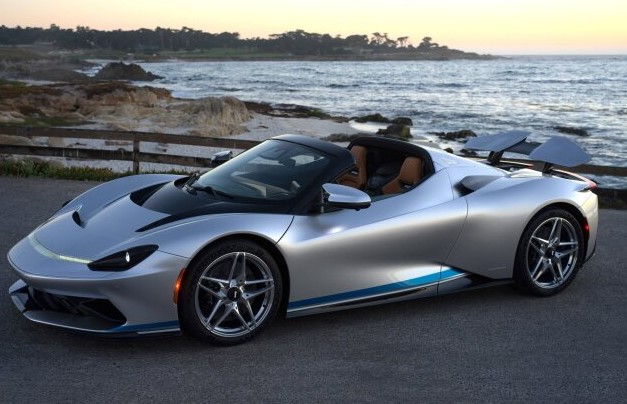
Picture a private, climate-controlled runway in southern Europe. The air smells faintly of high-octane fuel and heated carbon fiber. I watched a driver carefully park an unreleased, hand-built hypercar valued at well over $15 million. The transport driver did not just lock the doors; he activated a military-grade security perimeter around the vehicle. To the average bystander, that dollar figure sounds like absolute madness for a machine meant to transport a human from point A to point B.
During my ten years testing elite machinery and consulting for high-net-worth collectors, I have learned that the market for the most expensive cars operates on an entirely different plane of reality. These vehicles are not commodities; they are rolling sculpture, cutting-edge engineering laboratories, and highly lucrative alternative financial assets. When an automotive manufacturer attaches an eight-figure price tag to a vehicle, you are no longer paying for transportation—you are buying entry into a hyper-exclusive club of historical preservation and engineering supremacy.
For enthusiasts and curious observers looking to understand this ultra-premium landscape, let us pull back the satin car covers. We will explore what makes these vehicles worth more than private islands, and see which machines currently crown the absolute peak of the automotive pyramid.
The Anatomy of an Eight-Figure Price Tag: Why Do They Cost So Much?
To understand how a vehicle crosses the multi-million-dollar threshold, it helps to look at the manufacturing process through a specialized lens.
Think of a standard premium sports car like a high-end designer suit bought off the rack at a luxury boutique. It is expensive, beautifully made, and fits incredibly well. The world’s most expensive cars, however, are completely bespoke couture. They are hand-tailored from scratch over thousands of hours to fit the exact physical measurements and aesthetic whims of a single individual.
From a technical standpoint, three primary factors drive these stratospheric valuations:
Extreme Material Science
These vehicles utilize materials originally developed for aerospace engineering and Formula 1 racing. We are talking about custom-weave carbon fiber body panels infused with real gold flake to manage engine bay heat, titanium components printed via industrial 3D lasers, and switchgear machined out of solid blocks of precious metals.
Radical Powertrain Engineering
The engines powering these mechanical beasts are marvels of thermodynamic efficiency. Manufacturers spend millions developing quad-turbocharged W16 powerplants or high-output hybrid drivetrains that push far past 1,500 horsepower, requiring specialized cooling systems featuring up to ten independent radiators.
Coachbuilding and Artificial Scarcity
The ultimate multiplier of car value is scarcity. When a manufacturer limits a production run to five, three, or even a single one-of-one unit globally, the basic laws of supply and demand take over. Classic coachbuilding—the art of hand-shaping unique aluminum or carbon bodies over a bespoke chassis—has made a massive comeback, turning cars into rolling museum pieces.
The Titans of Wealth: The Most Expensive Cars in the World
While the upper echelon of the hypercar market shifts constantly due to private auctions, a few modern production and coachbuilt masterpieces stand out as the definitive benchmarks of automotive opulence.
1. The Peak of Tailored Luxury: Rolls-Royce Boat Tail & Droptail Series
Rolls-Royce has completely reclaimed its historical crown as the master of ultra-exclusive coachbuilding. Their modern Coachbuild division creates entirely unique vehicles for specific clients.
The Boat Tail and subsequent Droptail creations feature rear decks designed to mimic the hull of a luxury J-Class yacht, opening up at the press of a button to reveal a hosting suite complete with synchronized cocktail tables, matching stools, and a temperature-controlled champagne fridge.
-
Estimated Price: $25 Million to $30+ Million
-
The Standout Feature: The hand-finished wood veneers on the rear deck contain over 150 individual pieces of open-pore wood, perfectly aligned to mimic the grain lines of high-end maritime decking.
2. The French Speed Icon: Bugatti La Voiture Noire
Built as a modern spiritual homage to Jean Bugatti’s lost personal Type 57 SC Atlantic from the 1930s, “The Black Car” is a masterclass in aggressive elegance.
Beneath its sinister, hand-sculpted glossy carbon fiber skin lies Bugatti’s legendary 8.0-liter quad-turbocharged W16 engine, producing an astonishing 1,500 horsepower delivered through an all-wheel-drive system.
-
Estimated Price: $18.7 Million (after taxes)
-
The Standout Feature: The rear fascia features a seamless, floating light bar paired with six independent, functional chrome exhaust tips arranged in a striking horizontal line.
3. The Pinnacle of Athletic Art: Pagani Codalunga
Horacio Pagani treats automotive engineering as pure Renaissance art, famously blending the philosophies of Leonardo da Vinci into every component.
The Codalunga (meaning “Longtail” in Italian) was commissioned by two collectors who wanted a clean, flowing design reminiscent of 1960s Le Mans race cars. Powered by a bespoke twin-turbocharged Mercedes-AMG V12 engine, its interior looks more like the inside of a luxury mechanical watch than a car cabin.
-
Estimated Price: $7.4 Million
-
The Standout Feature: The entire titanium exhaust system is exposed at the rear, weighing just 9.7 pounds and finished with a special ceramic coating that changes color subtly as the engine heats up.
High-End Technical Jargon: Speaking the Language of Hypercars
When studying these top-tier vehicles, you will encounter complex terminology that defines their engineering prowess:
-
Monocoque Chassis: A central structural shell where the external skin supports the majority of the vehicle’s structural loads, almost always constructed from advanced carbon fiber weaves in hypercars.
-
Active Aerodynamics: Computer-controlled wings, flaps, and air ducts that automatically adjust their angles in real-time based on speed and cornering forces to maximize downforce and stability.
-
Power-to-Weight Ratio: The metric that dictates true performance, calculated by dividing the vehicle’s horsepower by its total weight. Ultra-exclusive cars aim for a 1:1 ratio ($1\text{ hp}$ per every kilogram of weight).
-
Kinetic Energy Recovery System (KERS): An advanced hybrid technology that captures kinetic energy usually wasted during braking and stores it in an electric battery pack to provide an instant boost of acceleration.
Expert Advice: The Hidden Realities of Hypercar Upkeep
Pro Tip: The Cost of Ownership Doesn’t Stop at the Purchase Price
For intermediate enthusiasts entering the world of high-value car collecting, the initial purchase price is just the tip of the iceberg. These mechanical thoroughbreds require specialized, regimented care that makes standard vehicle maintenance look incredibly cheap.
Take a Bugatti, for example. A single annual fluid service can easily cost upwards of $25,000 because technicians must completely remove the rear bodywork just to access the oil plugs. Furthermore, specialized hypercar tires are often custom-engineered and glued directly to the wheel rims to handle speeds north of 250 mph. Replacing a set of these tires can cost between $40,000 and $100,000, and they must be replaced every few years regardless of whether the car has been driven or sat in a garage.
Moving Safely into the Future of Automotive Art
The world of the most expensive cars is a fascinating intersection of raw mechanical speed, extreme wealth, and artistic expression. While critics may argue that these multi-million-dollar price tags are excessive, these vehicles serve a vital purpose for the broader automotive ecosystem. They act as the ultimate concept beds, pushing structural engineering, aerodynamic research, and materials science to their absolute limits. The cutting-edge carbon safety cells and hybrid efficiency systems developed for an eight-figure hypercar today will slowly trickle down into standard consumer vehicles over the next decade.
Ultimately, these machines are a testament to what human engineers can achieve when they are handed a completely blank check and told to ignore every rule book.
If budget were absolutely no object and you were handed an invitation to commission a one-of-one coachbuilt vehicle today, which direction would you take? Would you design an ultra-isolated, yacht-inspired luxury cruiser like a Rolls-Royce, or a raw, track-focused carbon fiber weapon powered by a roaring V12 engine? Let me know your dream configuration in the comments below!


 You are driving home after a grueling ten-hour workday. Your mind is wandering, calculating tomorrow’s to-do list, when the brake lights of the SUV ahead suddenly flare a bright, angry red. In the fraction of a second it takes your brain to register the danger and your foot to reach the pedal, an invisible force slams the brakes for you. Your seatbelt locks, the ABS chatters, and your car screeches to a halt just inches from a crumpled bumper.