Source:https://mycarheaven.com

You are accelerating down a winding coastal highway, your hands gripping a thin, unassisted wooden steering wheel. There is no touchscreen dashboard buzzing with notifications, no traction control quietly correcting your mistakes, and no digital artificial exhaust notes pumped through structural speakers. Instead, you hear the raw, mechanical symphony of dual Weber carburetors inhaling air just inches from your chest. You feel every pebble on the tarmac vibrating through the seat frame. You aren’t just operating a machine—you are actively conversing with it.

Modern sports cars are marvels of clinical speed, but they often insulate the driver behind a thick firewall of digital processors. That is exactly why enthusiast collectors and weekend drivers are turning back the clock.

Over my ten-plus years of evaluating drivetrains and hunting down rare automotive icons, I have learned that the allure of the best vintage sports cars lies entirely in their analog imperfection. They demand physical effort, mechanical sympathy, and an alert mind. If you are looking to enter the world of classic motoring, you don’t just need a buyer’s guide—you need an honest breakdown of which legends offer the most rewarding ownership experience without turning into a permanent garage ornament.

The Vintage Analog Experience: A Simple Analogy

To understand why classic sports cars handle the way they do, it helps to look at a simple analogy.

Driving a modern performance car is like playing a high-end racing video game. The computer interprets your sloppy inputs, smooths out the rough edges, and makes you look like a professional driver. Driving a vintage sports car is like playing an acoustic guitar. If your fingers aren’t in the exact right spot, or if your timing on the clutch pedal is off by a millisecond, the car will immediately give you feedback via a grinding synchromesh or an unceremonious spin. You get out what you put in.

1. Porsche 911 (Air-Cooled Era): The Engineering Maverick

When it comes to pure automotive iconography, very few profiles can compete with the air-cooled Porsche 911, specifically models built between 1963 and 1998 (from the early 2.0-liter models up to the highly refined 993 generation).

The Technical Persona

The 911 breaks the fundamental rules of vehicle dynamics. By hanging a flat-six engine completely behind the rear axle, Porsche created a car with a heavy rear weight bias.

  • The Drive: Under hard acceleration, the rear tires bite into the pavement with unbelievable traction. However, if you enter a corner too fast and lift your foot off the throttle abruptly, that heavy rear end wants to act like a pendulum, swinging forward in an event known as lift-off oversteer.

  • Why It’s a Legend: Mastering an air-cooled 911 is a badge of honor. The floor-mounted pedals, precise unassisted rack-and-pinion steering, and mechanical reliability make it an incredibly rewarding daily-driver candidate.

2. Datsun 240Z: The Fairlady That Conquered the West

In the early 1970s, European brands held a monopoly on beautiful, fast grand tourers. Then, Japan dropped a bombshell that changed the automotive landscape forever: the Datsun 240Z (known domestically as the Nissan Fairlady Z).

The Technical Persona

The 240Z offered the gorgeous proportions of a Jaguar E-Type but paired it with Japanese reliability and an affordable price tag. Under the elongated hood sat the legendary L24 engine—a glassy-smooth 2.4-liter inline-six fed by twin Hitachi SU-style carburetors.

  • The Drive: Featuring four-wheel independent suspension and a crisp 5-speed manual transmission, the 240Z punches well above its weight class. It has a neutral chassis balance that makes it incredibly approachable for beginner and intermediate vintage drivers alike.

  • Why It’s a Legend: It proved that a reliable vintage sports car wasn’t an oxymoron. Parts availability is vast, and the engine bay is spacious enough for amateur mechanics to turn wrenches comfortably.

3. Alfa Romeo Spider: The Ultimate Open-Air Romance

If your vision of vintage motoring involves winding tarmac, a pair of leather driving gloves, and the wind in your hair, the Alfa Romeo Spider (specifically the Series 1 “Duetto” and Series 2 models) is your calling card.

Twin-Cam Inline-4 Engine ──► Mechanical Fuel Injection/Webers ──► Pure Italian Sound

The Technical Persona

Alfas are defined by their hearts. The aluminum twin-cam inline-four engine is an engineering work of art, revving with an eager, raspy exhaust note that coaxes you to downshift at every single underpass.

  • The Drive: It is not a straight-line muscle car. The Spider is all about momentum. It leans in corners, but it holds its line tenaciously, communicating through a lively chassis that makes 45 MPH feel like you are chasing a podium finish at Monaco.

  • Why It’s a Legend: It offers pure Italian soul and classic styling without the million-dollar price tag of a vintage Ferrari or Maserati.

4. Mazda MX-5 Miata (NA): The Modern Vintage Benchmark

Purists might argue whether a car from the late 1980s and 1990s qualifies as a true “vintage” machine, but the first-generation (NA) Mazda Miata is officially a certified classic.

Pop-Up Headlights ──► 50:50 Weight Distribution ──► Unmatched Reliability

The Technical Persona

Mazda engineers took the lightweight, rear-wheel-drive blueprint of 1960s British roadsters (like the Lotus Elan) and built it using modern Japanese manufacturing standards. The result was a lightweight chassis with a perfect 50:50 weight distribution and iconic pop-up headlights.

  • The Drive: The shifter mechanism in an NA Miata is widely regarded as one of the best ever engineered—short, mechanical, and bolt-action precise. It is the ultimate platform for learning the delicate art of heel-and-toe downshifting.

  • Why It’s a Legend: It offers 95% of the analog fun of an old British roadster with 0% of the oil leaks. It is, without question, the absolute best entry point for anyone looking to understand sports car dynamics.

Head-to-Head Comparison: Classic Performance Legends

Vintage Icon Engine Layout Key Power Plant Defining Trait Best For
Porsche 911 (Air-Cooled) Rear-Engine, RWD 2.0L – 3.6L Flat-6 Pendulum handling, bulletproof build Experienced drivers, long-term investors
Datsun 240Z Front-Engine, RWD 2.4L Inline-6 Balance of styling and reliability DIY mechanics, everyday usability
Alfa Romeo Spider Front-Engine, RWD 1.6L – 2.0L Twin-Cam High-revving Italian exhaust note Sunny weekends, open-air enthusiasts
Mazda Miata (NA) Front-Engine, RWD 1.6L / 1.8L Inline-4 Pop-up lights, ultra-light chassis Absolute beginners, track day hobbyists

Pro Tips & Hidden Warnings

Having spent countless nights stranded on dark backroads waiting for tow trucks, I have developed two non-negotiable rules for buying into this niche.

⚠️ The Hidden Warning (The Lucas Electric Trap): When exploring vintage British sports cars (like Triumphs, MGs, or older Jaguars), be highly wary of their electrical systems, often supplied by Lucas. Rust is terrible, but tracing a parasitic ground fault inside a crumbling wiring harness can drive even a seasoned technician to madness. Always inspect the wiring before buying.

💡 Pro Tip (The Document Check): When hunting for one of the best vintage sports cars, prioritize a vehicle with a verifiable service history file over a car with low mileage. An old sports car that has sat stagnant in a damp garage for 15 years will often require double the financial investment in fresh gaskets, rubber fuel lines, and brake calipers compared to a car that has been driven and maintained regularly.

The Verdict: Which Legend Calls to You?

The journey into classic car ownership shouldn’t be governed by spreadsheets or raw horsepower statistics; it’s a decision made by the heart.

  • Choose the Mazda Miata or Datsun 240Z if you want an approachable, dependable analog partner that you can comfortably maintain yourself on Sunday afternoons.

  • Choose the Alfa Romeo Spider if you want an emotional, sensory-rich weekend escape vehicle that prioritizes style and auditory drama over outright speed.

  • Choose the Air-Cooled Porsche 911 if you want the ultimate engineering challenge, rock-solid investment potential, and a machine that rewards precise driver inputs.

Share Your Thoughts

Every vintage car has a distinct personality, and half the fun of ownership is joining the community of passionate keepers who preserve them.

Are you saving up for an iconic Japanese cruiser, or does the raw sound of an air-cooled European engine keep you up at night? Let me know which vintage sports car is sitting at the top of your bucket list in the comments below!

Source:https://www.slashgear.com

Pull the dipstick out of an engine that has skipped its last two oil changes, and you will see something that looks less like a lubricant and more like cold molasses. In my ten years of tearing down blown engines and rebuilding cylinder heads, I have seen macroscopic destruction caused by microscopic neglect. People spend weeks researching the perfect car, yet they will grab the cheapest, no-name bottle off a gas station shelf when their oil light flickers.

The reality is that your engine operates in a brutal environment. Internal combustion creates temperatures exceeding 400°F and forces pistons to slide up and down thousands of times per minute. The right choice from the best engine oil brands is the only barrier keeping those metal components from welding themselves together into a very expensive piece of scrap metal.

Whether you are a daily commuter looking to stretch your car’s lifespan or an enthusiast chasing every ounce of horsepower, understanding what goes into your crankcase is the single most important maintenance decision you can make.

The Chemistry of Protection: How Premium Oils Fight Wear

To choose the right lubricant, you have to look past the marketing slogans and understand the technical job the fluid performs. Engine oil is not just a slippery liquid; it is a highly engineered cocktail of base oils and chemical additive packages.

Think of your engine oil like a team of specialized construction workers. The base oil acts as the foundation, while the additives are the specialists:

  • Detergents & Dispersants: These act like tiny soap molecules, scrubbing away carbon deposits and keeping soot suspended in the fluid so it does not settle into engine sludge.

  • Anti-Wear Agents (like ZDDP): These leave a microscopic sacrificial film on metal surfaces, protecting high-friction areas like camshaft lobes when the physical oil film gets squeezed out under heavy loads.

  • Viscosity Index Improvers: These are polymer chains that expand as the engine heats up, preventing the oil from thinning out dangerously at high temperatures while allowing it to flow instantly during a cold start.

The Best Engine Oil Brands for Maximum Longevity and Performance

The automotive market is filled with options, but a few iconic names consistently dominate independent laboratory testing and professional mechanical bays due to their strict quality control and advanced formulations.

1. The Industry Gold Standard: Mobil 1 Advanced Full Synthetic

If you ask ten master mechanics what they pour into their personal vehicles, more than half will say Mobil 1. There is a reason it is the factory-fill choice for ultra-high-performance vehicles like Porsche and Corvette.

Its proprietary full synthetic formula offers unparalleled thermal stability. It resists chemical breakdown long after conventional oils have thinned out, making it an exceptional choice for modern turbocharged engines that run notoriously hot.

  • Pros: Excellent high-temperature oxidation resistance; widespread availability; exceptional cold-weather flow characteristics down to sub-zero temperatures.

  • Cons: Sits at a premium price point compared to entry-level store brands.

2. The Purity Champion: Pennzoil Platinum Full Synthetic

Pennzoil completely flipped the manufacturing script by introducing its patented PurePlus Technology. Instead of refining traditional crude oil from the ground, Pennzoil synthesizes its base oil from pure natural gas.

The result is a base fluid that is 99.5% pure, completely free of the sulfur and paraffin impurities found in standard crude. This extreme purity translates directly to cleaner pistons and reduced oil consumption over long drain intervals.

  • Pros: Unmatched piston cleanliness; excellent fuel economy benefits due to low friction modifiers; very low volatility (less oil vaporizes off under high heat).

  • Cons: The specialized natural gas base oil means it is rarely on the budget clearance rack.

3. The European Performance Choice: Castrol EDGE

If you drive a BMW, Audi, Volkswagen, or Jaguar Land Rover, Castrol EDGE is likely the oil your owner’s manual begs you to use. It holds more strict European OEM (Original Equipment Manufacturer) approvals than almost any other fluid on the shelf.

Castrol utilizes Fluid Titanium Technology, an additive package that physically changes its molecular structure under extreme pressure. When engine loads peak, the oil film hardens to keep metal surfaces safely apart, then returns to a fluid state when the pressure drops.

  • Pros: Incredible film strength under high mechanical loads; tailored specifically for tight European engine tolerances; superb protection for direct-injection systems.

  • Cons: Can be confusing to purchase, as you must match the specific European specification letter (like ACEA C3 or VW 504/507) to your exact vehicle.

4. The High-Mileage Savior: Valvoline High Mileage with MaxLife

Engines change as they age. Once an odometer crosses the 75,000-mile mark, internal rubber gaskets begin to dry out, shrink, and harden, leading to annoying oil leaks on your driveway.

Valvoline’s MaxLife formula is specifically engineered to combat this aging process. It includes proprietary seal conditioners that gently swell and re-soften brittle gaskets, stopping minor leaks from the inside out while boosting detergent levels to clean out years of accumulated varnish.

  • Pros: The undisputed king of stopping oil leaks in older vehicles; extra anti-wear additives for worn mechanical components; excellent value.

  • Cons: Not necessary for brand-new vehicles with tight, fresh factory seals.

Essential Lubrication Terms: Reading the Bottle

Before heading to the auto parts store, you need to understand the cryptic codes printed on every oil jug:

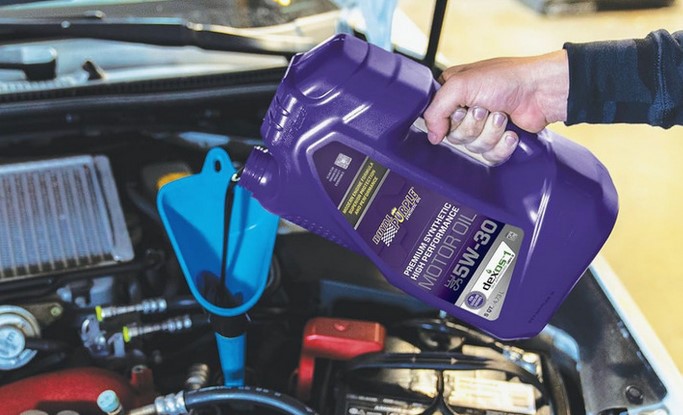
  • Viscosity Grade (e.g., 5W-30): The numbers indicate the thickness of the oil. The “5W” stands for Winter, showing how well the oil flows at freezing temperatures (lower is better for winter starts). The “30” indicates the oil’s thickness at operating temperature ($212^\circ\text{F}$).

  • API Service Symbol (The Donut): A circular stamp from the American Petroleum Institute. For modern gasoline cars, look for the latest “API SP” rating, which guarantees protection against low-speed pre-ignition (LSPI) in modern engines.

  • ILSAC GF-6: The latest global standard for passenger car engine lubricants, ensuring maximum fuel efficiency and emission system protection.

Expert Advice: The Truth About Extended Drain Claims

Pro Tip: Don’t Blindly Trust the 20,000-Mile Promise

Many premium synthetic oils proudly advertise that they can last up to 15,000 or 20,000 miles between oil changes. While the oil chemistry itself might survive that long in a laboratory test, your engine lives in the real world.

If you do a lot of short trips, drive in heavy stop-and-go city traffic, or live in a dusty environment, your engine is operating under what manufacturers classify as “Severe Driving Conditions.” Contaminants like unburnt fuel, moisture, and airborne dirt naturally seep into the crankcase. The oil filter can only hold so much debris before it bypasses. For real-world longevity, stick to a conservative 5,000 to 7,500-mile interval regardless of how advanced your synthetic oil claims to be.

Protect Your Investment One Fluid Ounce at a Time

Your vehicle’s engine is a magnificent piece of mechanical engineering, but it is entirely dependent on a microscopic film of oil to stay alive. Investing a few extra dollars into a top-tier synthetic oil like Mobil 1, Pennzoil, or Castrol is the cheapest insurance policy you can buy against premature wear, loss of compression, and catastrophic mechanical failure.

Always check your owner’s manual to verify the exact viscosity weight and OEM specification required for your specific vehicle before performing an oil change.

What brand of motor oil are you currently running in your car, and how often do you change it? Are you planning to make the switch to a full synthetic for your next service? Let me know your routine or ask your technical questions in the comments below!