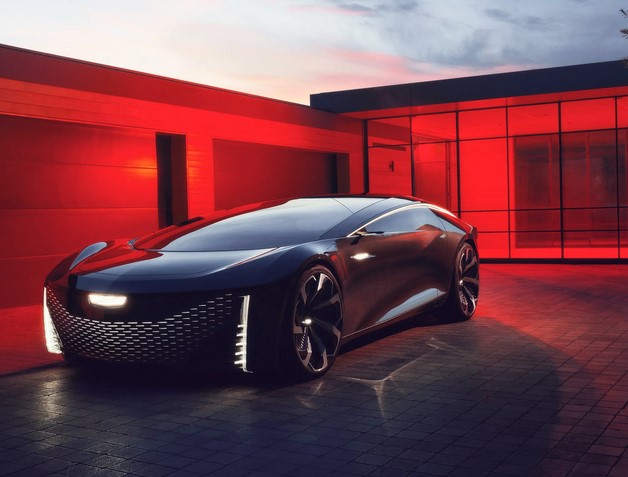
Imagine sinking into a heated, massaging leather seat after an exhausting nine-hour day of corporate meetings. You merge onto the gridlocked highway, pull two paddles on your steering wheel, and completely let go. You don’t just take your hands off the wheel; you turn your head, open your laptop, and start answering emails while your sedan effortlessly navigates the stop-and-go chaos at 40 MPH. The car is legally driving itself, and you are officially off the clock.
This isn’t a scene from a science fiction film—it is the reality of driving a modern luxury flagship in 2026.
Over my ten years as an automotive specialist and test driver, I’ve watched active driver assistance evolve from primitive, nervous lane-keep systems into ultra-smooth, artificial intelligence-driven co-pilots. But navigating this market is a minefield of marketing buzzwords. Automakers love to throw around words like “autonomous,” “autopilot,” and “self-driving,” but very few vehicles can actually let you take your eyes off the road.
If you are looking to buy one of the best luxury cars with self-driving features, you need to know exactly what you are paying for. Let’s pull back the curtain on the top autonomous vehicles leading the premium market today.
Decoding the Autonomy Scale: A Simple Analogy
To understand why some luxury cars drive better than others, you must understand the SAE Levels of Driving Automation (ranging from Level 0 to Level 5). Let’s use a simple analogy:
-
Level 2 (Partial Automation): Think of this like a highly trained service dog. It will keep you in your lane and pace the car ahead, but it requires you to hold the leash at all times. If you look away, it will bark (or beep) loudly. You are still legally responsible.
-
Level 3 (Conditional Automation): This is like an experienced chauffeur. Under specific conditions (like highway traffic jams), the car takes full legal liability for the driving task. You can read a book or watch a movie on the dashboard screen, provided you can take over if the chauffeur taps you on the shoulder.
[Level 2: Hands-Free / Eyes-On] ───► Requires Constant Human Supervision
[Level 3: Hands-Off / Eyes-Off]  ───► Car Takes Legal Liability (Conditional)
1. Mercedes-Benz S-Class & EQS: The Certified Perfectionists
When it comes to true, legal, “eyes-off-the-road” autonomy, Mercedes-Benz is currently wearing the crown.
The Tech: DRIVE PILOT (SAE Level 3)
Mercedes-Benz made automotive history by being the first manufacturer to achieve certified SAE Level 3 autonomy for the consumer market. Utilizing a complex array of over 35 sensors—including LiDAR (Light Detection and Ranging), optical cameras, long-range radar, and moisture sensors in the wheel wells—their DRIVE PILOT system takes complete control of the vehicle.
In approved geofenced areas (such as specific multi-lane highways in California, Nevada, and Germany) during heavy traffic at speeds up to 40 MPH (and up to 60 MPH/95 km/h on the German Autobahn), the car allows you to engage in secondary activities on the central MBUX Hyperscreen. You can watch a movie or browse the web legally.
-
The Vibe: Absolute serenity. The system drives with a conservative, human-like smoothness that minimizes abrupt braking.
-
The Catch: It requires clear daytime weather, no construction zones, and a driver-facing camera tracking your face to ensure you haven’t fallen asleep.
2. Tesla Model S & Model X: The Ambitious Innovators
You cannot talk about autonomous tech without mentioning the brand that brought the concept to the mainstream.
The Tech: Full Self-Driving (Supervised) v14 (SAE Level 2)
Despite its ambitious name, Tesla’s Full Self-Driving (FSD) system remains a Level 2 technology. However, what it lacks in legal “eyes-off” certification, it makes up for in sheer geographical versatility. While Mercedes is locked to specific highways, Tesla’s AI-driven system can navigate complex urban environments, handle roundabouts, execute unprotected left turns, and obey traffic signals right outside your driveway.
Tesla’s engineering philosophy relies strictly on Tesla Vision—a camera-only approach that completely ditches LiDAR and radar, mimicking how human eyes process the road.
-
The Vibe: Cutting-edge but demanding. Watching a Model S smoothly navigate a chaotic inner-city intersection via over-the-air software updates is mind-blowing.
-
The Catch: It requires constant, unyielding human supervision. The cabin camera will immediately penalize you if your eyes wander from the road for more than a few seconds.
3. Cadillac Escalade & Celestiq: The Highway Cruising Kings
General Motors has quietly built one of the most stable, relaxing hands-free highway driving systems on the planet.
The Tech: Super Cruise (SAE Level 2+)
Available on luxury heavyweights like the Cadillac Escalade and the ultra-exclusive Celestiq sedan, Super Cruise allows for true hands-free driving across more than 400,000 miles of mapped highways in North America.
Instead of reacting to the road purely in real-time, Super Cruise pairs its on-board cameras and radars with precision LiDAR-scanned high-definition maps. Because the car already knows the exact curvature and elevation changes of the highway miles before you arrive, the steering inputs are incredibly precise and stable.
-
The Vibe: The ultimate road-tripper. It features an automated lane-change function; simply tap your turn signal, and the vehicle will autonomously check its blind spots and slide into the next lane.
-
The Catch: If the highway hasn’t been pre-mapped by GM’s fleet, the system will not engage.
4. BMW 7 Series & iX: The Intelligent Companions
BMW approaches autonomous luxury with a heavy focus on driver confidence and high-speed highway stability.
The Tech: BMW Highway Assistant (SAE Level 2+)
Part of the Active Driving Assistance Professional package, BMW’s Highway Assistant allows for hands-free driving on compatible freeways at speeds up to 85 MPH.
What sets BMW apart is its intuitive driver-monitoring integration. Instead of forcing you to nudge the steering wheel to prove you are awake, an infrared camera built into the digital dashboard tracks your eyes. If you want to initiate an automated lane change, you don’t even have to use the turn signal stalk—you simply look at the corresponding side-view mirror, and the car executes the pass.
Side-by-Side Comparison: Autonomous Luxury Titans
| Luxury Vehicle Model | Self-Driving System | Autonomy Level | Sensor Strategy | Standout Feature |
| Mercedes-Benz S-Class / EQS | DRIVE PILOT | Level 3 (Conditional) | LiDAR, Radar, Cameras, Ultrasonics | Legal “Eyes-Off” entertainment access |
| Tesla Model S / Model X | FSD (Supervised) v14 | Level 2 (Hands-Free) | Pure Vision (Cameras Only) | Navigates unmapped urban city streets |
| Cadillac Escalade | Super Cruise | Level 2+ (Hands-Free) | HD Mapping, Radar, Cameras | Ultra-stable pre-mapped highway tracking |
| BMW 7 Series / iX | Highway Assistant | Level 2+ (Hands-Free) | Radar, Cameras, Eye-Tracking | Eye-gaze activated lane changes |
Pro Tips & Hidden Warnings
⚠️ The Hidden Warning (The Liability Trap): Always remember that if a car is classified as Level 2, you are the driver, and you are legally liable for any accidents. If the system miscalculates a construction barrier, your insurance company handles the claim. Only with Mercedes’ Level 3 Drive Pilot does the manufacturer assume legal liability when the system is actively engaged.
💡 Pro Tip (The Sensor Cleanliness Rule): Autonomous luxury cars are essentially rolling supercomputers covered in glass eyes. In winter or heavy rain, road grime, salt, and mud will blind your LiDAR and camera sensors, causes the self-driving features to abruptly disengage. Keep a microfiber cloth in your glovebox to wipe down the sensors before long trips!
The Verdict: Which System Fits Your Luxury Lifestyle?
Choosing the right autonomous luxury vehicle depends entirely on where and how you spend your time behind the wheel:
-
Choose Mercedes-Benz if you suffer through horrific, daily stop-and-go highway commutes and want to completely reclaim that time to work or relax legally.
-
Choose Tesla if you live in a technological bubble, love software updates, and want a vehicle that attempts to handle local urban driving.
-
Choose Cadillac or BMW if you are a highway road-tripper who wants a flawless, rock-solid hands-free cruising experience at high speeds.
Let’s Connect
The gap between driving a machine and riding with an intelligent partner is closing faster than ever.
Are you ready to trust a vehicle enough to take your eyes off the road, or do you prefer keeping your hands firmly on the wheel? Drop your thoughts, or tell me which luxury system you are eyeing, in the comments below!