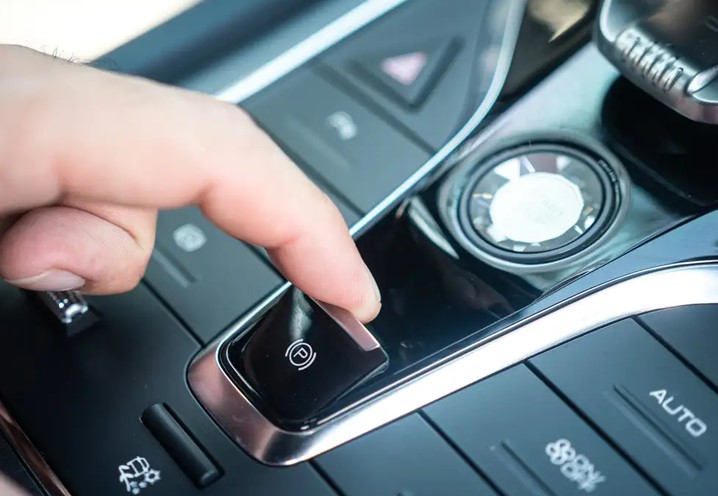
Imagine pulling up to a 30-degree incline on a steep garage ramp. You release the foot brake, reach for the center console, and instead of yanking a heavy mechanical lever until your shoulder clicks, you lightly flick a tiny plastic switch with your index finger. You hear a subtle high-pitched hum from the rear axle, and 4,000 pounds of steel lock dead in place—no rolling back, no muscle required.
In my 10-plus years of inspecting undercarriages, replacing worn calipers, and diagnosing tricky chassis electronics, I’ve watched the classic emergency brake lever virtually vanish from modern production lines. What replaced it is the Electric Parking Brake (EPB)—an electromechanical system that blends digital convenience with immense clamping force.
If you are looking to understand the top electric parking brakes dominating modern cars today—whether you’re buying a new vehicle, servicing your current ride, or curious about OEM upgrades—this deep-dive guide covers the best engineering options, how they operate, and real-world trade-offs you need to know.
How Electric Parking Brakes Work: The Tech Behind the Switch
To understand why carmakers abandoned steel cables for digital microcontrollers, let’s look under the floor pan. Traditional handbrakes rely on long steel cables that stretch over time, rust inside their rubber sleeves, and require manual adjustments at the lever console.
The Bicycle Brake vs. Hydraulic Press Analogy
Think of a traditional handbrake like a vintage 10-speed bicycle brake cable—it works fine until the cable stretches or slips out of alignment.
An Electric Parking Brake acts more like an automated hydraulic press attached directly to your brake rotor. When you pull the console switch, an Electronic Control Unit (ECU) sends a 12V signal directly to an electric motor mounted on the brake assembly. The motor turns a reduction gearbox, spinning a threaded spindle nut that forces the brake piston against the pads with precise, repeatable pressure every single time.
+-------------------------------------------------------------------------+
|                  HOW MOTOR-ON-CALIPER (EPB) OPERATES                    |
+-------------------+--------------------+--------------------------------+
| Electronic Switch | ECU Signal         | Actuator & Caliper             |
+-------------------+--------------------+--------------------------------+
| Driver pulls EPB  | CAN-Bus verifies   | Electric motor spins gearbox,  |
| console switch    | vehicle velocity   | driving spindle thread to clamp|
| (12V command)     | is zero (or safe)  | rear brake pads to rotor       |
+-------------------+--------------------+--------------------------------+
The 2 Primary Types of Electric Parking Brake Systems
Not all EPB setups are created equal. Manufacturers utilize two primary mechanical architectures across light-duty cars, heavy SUVs, and performance vehicles.
1. Motor-on-Caliper (Integrated EPB)
This is the modern industry standard used in over 80% of new passenger vehicles.
-
How it works: A small bidirectional electric motor and reduction gearbox sit bolted directly onto the rear brake caliper housing.
-
Pros: Completely eliminates mechanical cables, saves up to 13 lbs (6 kg) of vehicle weight, and integrates directly with modern electronic stability control (ESC) systems.
-
Cons: Makes rear brake pad changes impossible without entering a electronic “Service/Maintenance Mode” via diagnostic tools or dashboard menus.
2. Cable-Puller / Actuator EPB
An intermediate technology often seen on mid-2010s crossovers, luxury haulers, and truck chassis.
-
How it works: Instead of individual motors on each wheel, a single centralized electric motor unit mounts under the boot or chassis. This central motor pulls traditional steel cables attached to standard drum or disc parking brakes.
-
Pros: Allows car manufacturers to add electronic push-button parking without redesigning their existing rear brake calipers.
-
Cons: Still prone to cable stretch, rust, and cable binding over long winter seasons.
Top Electric Parking Brake Options & OEM Systems Evaluated
When reviewing the top electric parking brakes on the market, we are evaluating the engineering systems manufactured by major Tier-1 automotive suppliers that supply global car manufacturers.
1. ZF Friedrichshafen (ZF Motor-on-Caliper) — The Industry Pioneer
ZF invented the modern Motor-on-Caliper system in the early 2000s and has produced well over 250 million units globally.
-
Where You Find It: Volkswagen Group (Audi, VW, Porsche), BMW, Ford, Volvo, and Honda.
-
Why It’s a Top Pick: ZF’s system is legendary in workshop circles for long-term motor reliability, low power consumption, and instant engagement speeds. It seamlessly interfaces with Hill Hold Assist and Automatic Emergency Stop functions.
2. Continental Teves (EPB-Ci / Green Caliper) — Built for Electric Vehicles
Continental produces high-efficiency, lightweight integrated calipers designed specifically around the demands of modern hybrid and electric vehicles.
-
Where You Find It: Mercedes-Benz, Hyundai-Kia, Stellantis, and various EV platforms.
-
Why It’s a Top Pick: Continental’s latest “Green Caliper” designs significantly reduce residual brake drag—a common issue where pads lightly brush the rotor while driving—improving overall battery range and efficiency in modern EVs.
3. Brembo Sensify & High-Performance EPB — Precision for Sports Cars
Brembo takes parking brake engineering into the super-car and high-performance domain.
-
Where You Find It: Ferrari, Alfa Romeo, Cadillac V-Series, and high-end performance EVs.
-
Why It’s a Top Pick: Rather than looking like a utilitarian plastic unit, Brembo integrates sleek aluminum actuator housings directly into high-performance multi-piston rear calipers, keeping unsprung weight low while providing immense static clamping force.
Comparing EPB Systems: Features vs. Real-World Usability
+---------------------------------------------------------------------------------------+
|                    ELECTRIC PARKING BRAKE SYSTEM COMPARISON                           |
+---------------------+------------------------------+----------------------------------+
| Feature / Metric    | Motor-on-Caliper (e.g., ZF)  | Cable-Puller (Central Actuator)  |
+---------------------+------------------------------+----------------------------------+
| Mechanical Complexity| Low (No cables or levers)   | Moderate (Uses cables & linkages)|
| Weight Reduction    | High (Saves 10-13 lbs)       | Low                              |
| Brake Service Difficulty | Requires Diagnostic Mode| Standard (Manual retraction)     |
| Long-Term Durability| High (Weather-sealed unit)   | Moderate (Cables rust/stretch)   |
| Emergency Function  | Dynamic braking via ABS/ESC  | Cable tension pull               |
+---------------------+------------------------------+----------------------------------+
Expert Advice: Pro Tips & Hidden Warnings for DIYers & Drivers
Working on modern braking systems requires changing old mechanical habits. Here are two essential insights straight from the repair bay:
💡 Pro Tip: How to Change Rear Brake Pads on an EPB Car
Never force a rear caliper piston back with a C-clamp or pry bar on a Motor-on-Caliper EPB! Doing so will shatter the internal plastic reduction gear and ruin a $300+ caliper assembly.
Always put the braking system into Service / Retraction Mode first. This can be done using an OBD2 scan tool, or on many vehicles (like Ford, Mazda, and VW), through a specific dashboard button sequence that electronically rewinds the motor spindle inside the piston.
⚠️ The Dead Battery Trap
Because an EPB relies on 12V electrical power to retract, a completely dead car battery will leave your parking brake locked in place.
If your battery dies while parked on a driveway, you cannot simply push the car or tow it with all four wheels rolling until you either jump-start the battery or manually unscrew the actuator motor from the back of the caliper. Keep a portable lithium jump starter in your trunk to avoid getting stranded!
Final Verdict: Why the Digital Handbrake Is Here to Stay
The shift toward the top electric parking brakes isn’t just about saving center console space for cup holders and wireless phone chargers. By replacing mechanical handbrakes with computer-controlled actuators, automotive engineers have unlocked crucial safety features—from automatic emergency stop backups to effortless hill-start assists.
While servicing these systems requires a bit more digital know-how, their reliability, weight savings, and weather-proof operation make them one of the best chassis upgrades of the modern automotive era.
What’s your preference—do you still prefer pulling a classic mechanical handbrake lever, or do you love the sleek convenience of the electric brake switch? Let me know your thoughts or drop your maintenance questions in the comments below!