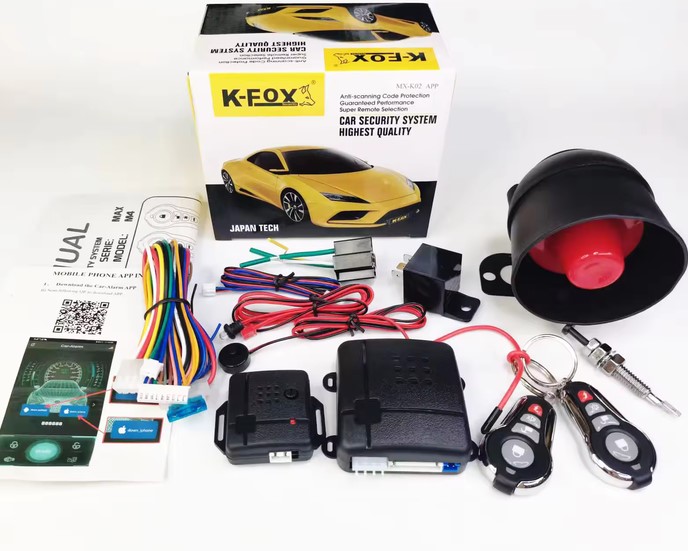
Outside your front door, two thieves approach your driveway holding a small signal-relay amplifier. Within forty seconds, they capture the wireless frequency of your key fob resting on your kitchen counter, unlock your car door, press the start button, and roll silently into the night. Your factory horn never sounds, your neighbors never wake up, and by sunrise, your pride and joy is already stripped for parts or parked inside a shipping container.
In my ten-plus years as an automotive electrician, shop supervisor, and vehicle security specialist, I have inspected thousands of vehicle break-ins and theft attempts. Traditional factory alarms—the ones that merely honk the horn when a door handle is pulled—are practically obsolete against modern tech-savvy thieves.
This is where smart car alarms with mobile apps change the game. By pairing two-way 4G LTE telematics, real-time GPS tracking, and digital starter kill relays directly to your smartphone, these systems give you complete authority over your vehicle from anywhere on the planet.
If you want to protect your vehicle with modern technology, this deep-dive guide breaks down how mobile-connected security works, what features matter most, and the best options on the market today.
How Smart Car Alarms with Mobile Apps Work (The Telematics Breakdown)
To understand why a smartphone-connected security system is vastly superior to a standard key-fob alarm, we need to look at how information travels from your vehicle to your pocket.
The Loud Dog vs. Personal Guard Analogy
Think of a traditional car alarm like a barking dog locked in a basement—it makes plenty of noise, but if you are at a movie theater, asleep in a high-rise apartment, or half a mile away, you will never hear it.
A smart car alarm with mobile apps acts like a 24/7 personal security guard standing next to your vehicle equipped with a direct radio link to your wrist. The moment a window shatters, a bumper gets bumped, or the engine cranks without your permission, your guard instantly taps you on the shoulder via a push notification.
+-------------------------------------------------------------------------+
|                SMART CAR ALARM TELEMATICS ARCHITECTURE                  |
+-------------------+--------------------+--------------------------------+
| Vehicle Sensors   | Onboard Control    | Cloud & Mobile Connectivity    |
+-------------------+--------------------+--------------------------------+
| • Glass Breaker   | Main Alarm ECU     | 4G LTE Cellular Module         |
| • Tilt/Tow Sensor |        │           |        │                       |
| • CAN-Bus Triggers|        ▼           |        ▼                       |
| • Shock/Vibration | Starter Kill Relay | Encrypted Cloud Server         |
|                   | & Siren Output     |        │                       |
|                   |                    |        ▼                       |
|                   |                    | Smartphone App Alert (Push/SMS)|
+-------------------+--------------------+--------------------------------+
The Role of 4G LTE Telematics and CAN-Bus
Modern systems connect directly to your vehicle’s Controller Area Network (CAN-Bus), which serves as the digital highway for all onboard microcontrollers. When paired with a 4G LTE cellular module, the alarm communicates bi-directionally.
This means you aren’t just sending commands (like locking doors or starting the engine remotely); the car is actively sending real-time telemetry back to your phone, including battery voltage, interior temperature, and diagnostic fault alerts.
Must-Have Features in Modern Mobile Car Security
When shopping for smart car alarms with mobile apps, do not fall for generic budget gadgets that lack essential security protocols. Look for these non-negotiable features:
1. Instant Push Notifications & Geofencing
Traditional alarms rely on radio frequencies that reach only 500 to 1,500 feet. LTE-based smart alarms offer unlimited range. Whether you are sitting at your office desk or vacationing across the globe, you receive instant alerts for:
-
Impact & Glass Breakage: Triggers from parking lot bumps or break-ins.
-
Tilt & Towing: Detects when a tow truck lifts your vehicle or thieves jack it up to steal the catalytic converter.
-
Geofence Violations: Sends a notification the moment your car crosses a pre-set virtual geographical boundary.
2. Remote Ignition Immobilization (Starter Kill)
If a thief manages to bypass your ignition lock, a top-tier smart alarm system enables you to trigger a remote starter kill directly through your mobile app. Once engaged, the system interrupts the starter circuit or fuel pump relay, ensuring the engine cannot be restarted once turned off.
3. Real-Time GPS Tracking & Live Breadcrumbs
If the worst happens and your car is towed away on a flatbed, integrated GPS tracking allows you to broadcast your vehicle’s exact latitude, longitude, speed, and heading directly to law enforcement in real time.
The Best Smart Car Alarms with Mobile Apps Evaluated
Having wired and programmed dozens of security packages in the bay, three standout telematics brands dominate the aftermarket scene.
1. Compustar DroneMobile (CSX / X1-LTE Series)
Compustar’s DroneMobile system is widely regarded by automotive technicians as the gold standard for smartphone-integrated remote start and security.
-
Why It Leads: Exceptional app stability, lightning-fast 4G LTE response times, and seamless integration with Compustar’s hardwired shock and tilt sensors.
-
Standout App Feature: Interactive driver monitoring, live battery health tracking, and custom geofencing schedules.
-
Best For: Drivers who want an ultra-reliable, professional-grade security suite with remote engine start capabilities.
2. Viper SmartStart Pro (DS4 / VSM550)
Viper is one of the most recognized names in vehicle security, and their SmartStart Pro telematics hardware lives up to the reputation.
-
Why It Leads: The VSM550 module utilizes hardware-optimized cellular channels to deliver near-instantaneous command execution (unlocking or arming in under a second).
-
Standout App Feature: Multi-vehicle management within a single dashboard, Wear OS/Apple Watch widget compatibility, and integrated roadside assistance dispatch.
-
Best For: Enthusiasts looking for ultra-fast reaction times and smartwatch integration.
3. CarLock (Plug-and-Play OBD-II Telematics)
If you aren’t ready to pay for professional installation or cut into your vehicle’s wiring harness, CarLock offers a simplified, DIY-friendly alternative.
-
Why It Leads: Plugs directly into your car’s OBD-II diagnostic port under the dashboard in less than two minutes.
-
Standout App Feature: Loud, harsh alarm notifications that override your phone’s silent mode during intrusion attempts.
-
Best For: Beginners, leased vehicle owners, or budget-conscious drivers wanting immediate GPS tracking and crash detection without permanent modifications.
Comparison of Top Smart Alarm Systems
+------------------------------------------------------------------------------------------------+
|                            SMART CAR ALARM SYSTEM COMPARISON                                   |
+---------------------+-------------------------+-----------------------+------------------------+
| Feature / System    | Compustar DroneMobile   | Viper SmartStart Pro  | CarLock OBD-II         |
+---------------------+-------------------------+-----------------------+------------------------+
| Connection Type     | Hardwired Telematics    | Hardwired Telematics  | Plug & Play (OBD-II)   |
| Primary Network     | 4G LTE / GPS            | 4G LTE / GPS          | 4G LTE / GPS           |
| Installation        | Professional Recommended| Professional Required | 100% DIY               |
| Starter Kill Option | Yes (Via Alarm ECU)     | Yes (Via DS4 System)  | Requires extra relay   |
| Sensor Integration  | Dual-Stage Shock/Tilt   | Digital Shock/Tilt    | Accelerometer-based    |
| Subscription Needed | Yes (Monthly/Annual)    | Yes (Monthly/Annual)  | Yes (Monthly/Annual)   |
+---------------------+-------------------------+-----------------------+------------------------+
Expert Advice: Pro Tips & Hidden Warnings
Installing security electronics requires sharp attention to detail. Here are two critical lessons I’ve learned from years inside the bay:
💡 Pro Tip: Insist on Stealth Wiring & Hidden Antenna Placement
A smart car alarm is only as good as its stealth. If a technician zip-ties the main cellular brain directly under the driver’s dash where the wiring loom is visible, a prepared thief can rip out the main fuse in five seconds.
Always demand a stealth installation: the control module should be buried deep behind the center console or instrument cluster, wrapped in factory-style black Tesa cloth tape so it blends indistinguishably into the original wiring harness.
⚠️ Factor In Subscription Costs & Battery Draw
Cellular-enabled smart car alarms with mobile apps require an active data plan to send alerts to your phone. Expect to pay a small monthly or annual service fee (typically $3 to $9 per month) to maintain the LTE connection.
Additionally, because telematics modules remain connected to cell towers 24/7, they draw a tiny continuous current from your 12V battery. If you leave your car parked at an airport for more than three weeks without driving, make sure your car battery is in healthy condition or connect a trickle charger to prevent a dead battery.
Final Verdict: Taking Control of Your Vehicle’s Safety
Upgrading to one of the best smart car alarms with mobile apps shifts the advantage back to you. Rather than relying on outdated horn honks that everyone ignores, telematics technology gives you real-time visibility, precise GPS tracking, and instant remote control right in the palm of your hand.
For total peace of mind, pair a hardwired system like Compustar DroneMobile or Viper SmartStart with professional stealth installation to keep your vehicle locked down tight.
Has your vehicle ever been targeted by thieves, or are you looking to upgrade from a basic factory key fob? Let me know your vehicle’s make and model in the comments below, and I’ll help you pick the right security setup!