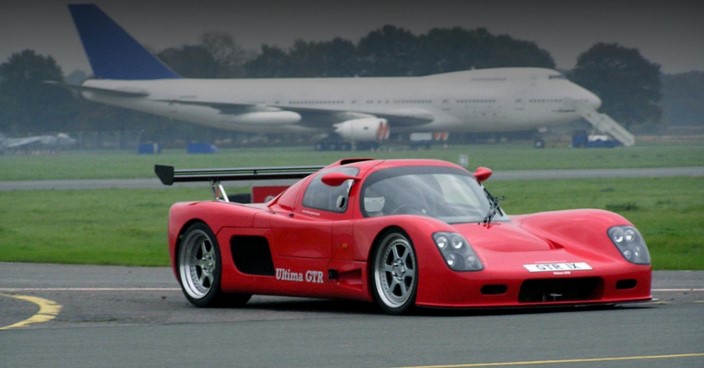
In the world of motorsports, achieving the fastest lap records on legendary circuits is the ultimate measure of a car’s performance. These records represent the pinnacle of engineering, skill, and speed, showcasing the raw capabilities of the cars and drivers who push them to their limits. From the twists and turns of the Nürburgring to the high-speed straights of Monza, each racing circuit presents unique challenges that test the resilience and engineering precision of the world’s most advanced machines. In this article, we’ll explore some of the fastest lap records set on these iconic tracks and the cars that achieved them, offering insight into what makes these vehicles truly exceptional.
The Significance of Fast Lap Times
Why Lap Records Matter
Lap records are not just about bragging rights. They are a symbol of technological excellence and represent the finest achievements in the automotive world. Achieving the fastest lap records on famous racetracks means that a car has surpassed its competitors in terms of speed, handling, aerodynamics, and braking capabilities. These records serve as benchmarks for future manufacturers, pushing the limits of innovation.
For car manufacturers, these records also have substantial marketing value. A lap time at a prestigious circuit, such as the Nürburgring Nordschleife or Circuit de Spa-Francorchamps, can elevate a car’s status in the automotive world, demonstrating the vehicle’s superior performance under some of the most demanding conditions. Fast lap times also appeal to enthusiasts, who see them as proof that the car is not only fast but also durable and reliable in extreme conditions.
Achieving a record lap time, however, is not just about raw power. It involves meticulous attention to detail, from tire selection and aerodynamics to driver skills and track knowledge. A single lap can be the result of years of engineering research and development, with manufacturers tirelessly testing and refining every aspect of the car.
Fastest Lap Records on Legendary Circuits
Nürburgring Nordschleife: The Green Hell
One of the most famous racetracks in the world is the Nürburgring Nordschleife, also known as “The Green Hell” due to its treacherous twists, elevation changes, and unpredictable weather conditions. Located in Germany, this 12.9-mile (20.8 km) track has earned a reputation as one of the most difficult and challenging circuits to navigate.
The fastest lap record at the Nürburgring is currently held by the Porsche 919 Hybrid Evo, which completed the lap in an astounding 5 minutes 19.546 seconds in 2018. This hybrid prototype car, developed by Porsche for endurance racing, achieved this time with the help of cutting-edge aerodynamics, lightweight construction, and a hybrid powertrain. The record lap showcased the incredible combination of electric motors and a turbocharged V4 engine working in harmony to generate over 1,150 horsepower.
Before the Porsche 919 Hybrid Evo, the title of the fastest lap was held by the Lamborghini Aventador SVJ, which set a time of 6 minutes 44.97 seconds in 2018. The Aventador SVJ is a testament to Lamborghini’s commitment to high-performance sports cars, featuring advanced aerodynamics, a naturally aspirated V12 engine, and innovative active systems that help the car maintain control at high speeds.
Circuit de Spa-Francorchamps: The Ardennes Rollercoaster
The Circuit de Spa-Francorchamps, located in Belgium, is one of the most renowned racetracks in Europe, known for its unpredictable weather and challenging turns, including the famous Eau Rouge. This 4.35-mile (7 km) circuit is a favorite among both drivers and fans for its scenic beauty and history in motorsports.
The fastest lap record at Spa is held by the Mercedes-AMG Project One, a hypercar powered by a Formula 1-inspired hybrid engine, which set a lap time of 1 minute 41.00 seconds in 2019. This record lap demonstrated the car’s ability to balance aerodynamics, hybrid technology, and engine performance, allowing it to tackle the steep hills and sharp corners of Spa with ease. The Project One is powered by a turbocharged 1.6-liter V6 engine and four electric motors, generating a combined output of 1,000 horsepower, making it one of the most powerful road-going cars in existence.
Before the Project One, the Porsche 911 GT2 RS held the record at Spa with a time of 1 minute 44.7 seconds. With a 3.8-liter twin-turbocharged flat-six engine producing 700 horsepower, the GT2 RS is a prime example of Porsche’s racing heritage combined with modern technology, capable of handling the track’s notorious corners and high-speed sections.
Monza: The Temple of Speed
Monza, located just outside Milan in Italy, is known as the “Temple of Speed.” With its long straights and high-speed corners, Monza is a track that demands both power and precision from its cars. The circuit is particularly famous for its ability to push the limits of a car’s top speed, as the high-speed straights allow for near-record-breaking velocities.
The fastest lap record at Monza is held by the Formula 1 car, the Mercedes-AMG F1 W11 EQ Performance, which set an impressive lap time of 1 minute 13.609 seconds during a 2020 pre-season test. Powered by a hybrid powertrain that combines a turbocharged V6 engine with an electric motor, the car produced over 1,000 horsepower. The F1 W11 EQ Performance’s high downforce, efficient aerodynamics, and hybrid power system made it the ultimate machine for breaking lap records on the high-speed track of Monza.
In the world of production cars, the Ferrari 488 Pista holds the fastest lap record at Monza for a non-race car, with a time of 1 minute 21.1 seconds. Ferrari’s 488 Pista is a testament to the brand’s legacy of performance, boasting a 3.9-liter twin-turbocharged V8 engine producing 711 horsepower. The 488 Pista combines Ferrari’s extensive racing expertise with cutting-edge technology to achieve remarkable lap times on some of the world’s most demanding circuits.
The Future of Fast Lap Records
Technological Advancements Driving New Records
As car manufacturers continue to push the boundaries of automotive engineering, the future of fastest lap records looks even more exciting. Innovations in electric and hybrid technology, lightweight materials, and active aerodynamics are all contributing to cars that are faster, more efficient, and more capable of breaking records.
Electric vehicles (EVs) are playing an increasingly prominent role in setting new lap records. Cars like the Rimac C_Two and the Tesla Roadster are expected to challenge traditional internal combustion engine (ICE) cars for dominance on the track in the coming years. The advantage of electric power lies in its instant torque delivery and the ability to maintain consistent power throughout the lap, which could be key to setting even faster lap times in the future.
Moreover, advancements in autonomous driving technology could lead to AI-assisted lap time records, where vehicles could operate with precision optimized for lap times. As artificial intelligence continues to evolve, future records may be set by cars capable of driving themselves with unmatched precision and control.
In conclusion, fastest lap records on legendary circuits like Nürburgring, Spa-Francorchamps, and Monza are not just about speed—they reflect the culmination of years of engineering innovation, precision, and driver skill. Whether it’s a hybrid race car like the Porsche 919 Hybrid Evo or a road-going hypercar like the Mercedes-AMG Project One, these records stand as benchmarks for what is possible in the world of high-performance vehicles. As manufacturers continue to innovate and develop new technologies, it is clear that the race for the fastest lap times will only intensify. The future of motorsport and high-performance cars promises even greater achievements, with lap records continuously being rewritten by faster, more advanced machines.